
How to Design a Luxury Home on Any Budget
Updated: May 19
By AG Interiors | Interior Design Tips & Inspiration
Luxury is not about how much you spend — it's about how thoughtfully you design. After working on residential projects across the international interior design, one truth stands out above all: the most impressive homes are not always the most expensive ones. They are the most intentional ones.
In this guide, we'll break down exactly how to achieve a high-end interior look regardless of your budget — using the same principles professional interior designers rely on every day.

1. Start with a Clear Design Vision
Before spending a single dollar, define your aesthetic. Luxury homes feel cohesive — every room tells the same story. Without a clear direction, even expensive purchases can look mismatched and chaotic.
Ask yourself:
What mood do I want this space to evoke? Calm and serene? Bold and dramatic?
What design style resonates with me — Japandi, Modern Farmhouse, Dark Moody, Transitional?
What colors, textures, and materials feel like "me"?
Pro tip: Create a mood board before you buy anything. Pinterest is the best tool for this — save inspirational images, identify patterns in what you love, and build your palette from there.
2. Invest Where It Matters Most
Luxury design is strategic. You don't need to spend big on everything — you need to spend big on the right things.
Spend more on:
Sofas and upholstered pieces — these are the focal point of any room and cheap fabrics show immediately
Lighting — nothing transforms a space more dramatically than the right light fixture
Window treatments — floor-to-ceiling curtains in quality fabric instantly elevate a room
Rugs — a large, quality rug grounds the entire space and adds warmth
Save on:
Decorative accessories and vases — high street stores do these well
Side tables and accent furniture — these can be mixed with vintage or budget finds
Wall art — prints from independent artists are affordable and unique

3. Master the Art of Mixing High and Low
The secret every interior designer knows: luxury is about contrast, not uniformity. Mixing investment pieces with affordable finds is not a compromise — it is the strategy.
A €3,000 sofa next to a €150 side table from a discount retailer can look extraordinary if the proportions, color, and texture are right. What matters is the overall composition, not the price tag of each individual item.
How to mix successfully:
Keep your palette tight — no more than 3-4 colors throughout
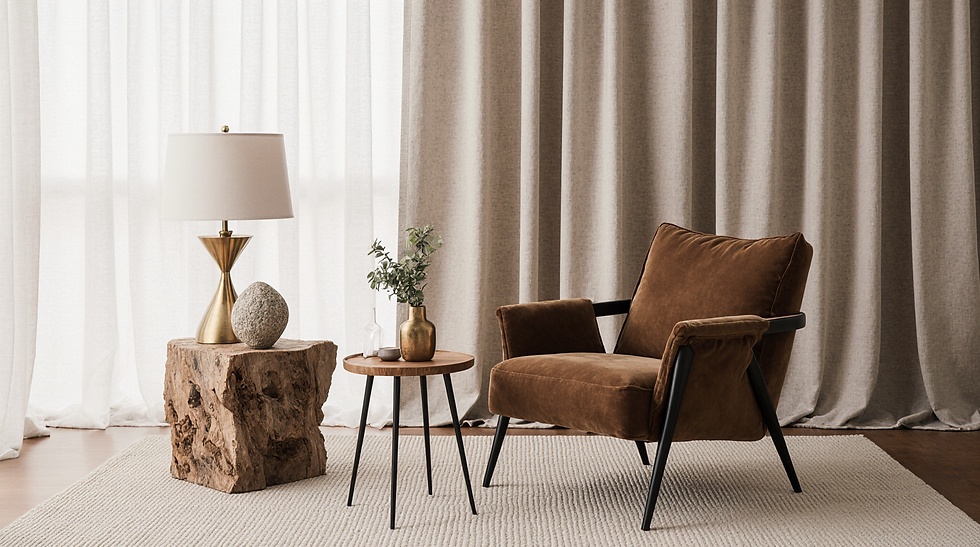
Vary textures — velvet, linen, wood, metal, stone should all coexist
Maintain consistent hardware finishes — brass, matte black, or chrome — pick one and stick with it throughout the home
4. Focus on Architectural Details
Luxury homes have one thing in common: architectural character. Crown molding, wall paneling, fluted details, arched doorways — these elements create the bones of an elegant space, and many of them are surprisingly affordable to add.
High-impact, lower cost architectural upgrades:
Picture rail molding along walls
Limewash or venetian plaster paint effects
Shiplap or fluted wood panel accent walls
Statement skirting boards and door frames
Ceiling roses and decorative coving
These details photograph beautifully, add perceived value to your home, and are exactly what makes a space look professionally designed.
5. Get Your Lighting Right
Lighting is the single most underestimated element in interior design. A poorly lit room with expensive furniture will always look worse than a well-lit room with affordable pieces.
The three-layer lighting rule:
Ambient lighting — the overall light source (ceiling fixtures, recessed lighting)
Task lighting — functional light for specific activities (reading lamps, under-cabinet lighting)
Accent lighting — decorative light that adds drama and depth (wall sconces, picture lights, LED strip lighting)
Every room needs all three. Most homes only have ambient lighting, which is why they never look quite right.
One affordable upgrade with maximum impact: Replace every lampshade in your home with a quality linen or pleated shade. The difference is immediate and costs very little.

6. Embrace Negative Space
One of the clearest signs of an amateur interior is too much "stuff." Luxury design breathes. It is edited, intentional, and uncluttered.
The concept of negative space — empty areas that give the eye a place to rest — is central to high-end design. You don't need more furniture or more accessories. You very likely need less.
The editing rule: Walk into any room and remove one third of the decorative objects. Live with it for a week. You will almost always prefer the edited version.
7. Use Color Like a Designer
Color is free — and it is one of the most powerful tools in interior design. A single paint color can completely transform the perception of a space.
Luxury color principles:
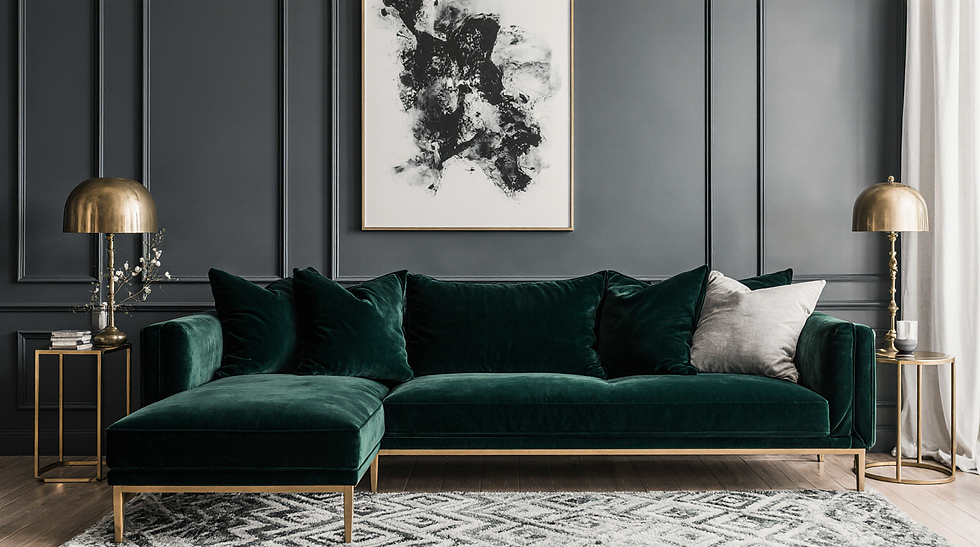
Dark, saturated walls in bedrooms and living rooms create instant drama and sophistication
Warm whites and off-whites feel far more luxurious than stark, cold whites
Monochromatic schemes — multiple tones of the same color — are a hallmark of high-end design
Don't forget the fifth wall — a painted or papered ceiling adds unexpected luxury
Currently leading colors in US and European luxury interiors: Deep terracotta, warm putty, charcoal grey, forest green, and rich navy.
8. Invest in Quality Textiles
Textiles are what make a home feel truly luxurious — and they are often more affordable than furniture. The tactile experience of a space is just as important as the visual one.
Where textiles make the biggest impact:
Bed linen — high thread count cotton or linen bedding transforms a bedroom immediately
Cushions — layering different sizes, textures, and fabrics adds depth and richness
Throws — a cashmere or wool throw draped over a sofa adds instant warmth and luxury
Curtains — always hang curtains higher than the window frame and let them fall to the floor
9. Shop Vintage and Pre-Loved
Some of the most interesting and luxurious interiors in the world are filled with vintage and antique pieces. They add character, uniqueness, and history that no high-street store can replicate.
Vintage markets, online platforms, and estate sales are full of quality pieces at a fraction of their original value. A beautifully aged mid-century armchair or an antique brass floor lamp can become the most talked-about piece in your home.
10. Think in Collections, Not Individual Pieces
Luxury interiors are curated. Objects are grouped intentionally — in odd numbers, in varying heights, in complementary materials.
The rule of three: Group decorative objects in sets of three — a tall vase, a medium candle, and a small sculptural object. Vary the height and texture. This simple principle immediately makes shelving and surfaces look styled and intentional.

Final Thoughts
Designing a luxury home is not about an unlimited budget. It is about clarity of vision, strategic investment, and an understanding of the principles that make a space feel truly elevated. Whether you are working with $5,000 or $50,000, these principles apply equally.
At AG Interiors, we believe that every home deserves to feel like a sanctuary — regardless of budget. Our design philosophy is rooted in timeless elegance, thoughtful curation, and spaces that genuinely improve the way you live.
Looking for more inspiration? Explore our Pinterest boards for curated luxury interior design ideas across every style and aesthetic.
Save this article for later and follow AG Interiors for weekly interior design tips and inspiration.


Comments